

WHAT SMELLS MERELY UNPLEASANT TO PEOPLE CAN SIGNAL A REAL THREAT TO ANIMALS.
For humans, smell is subjective. We notice scents and label them as pleasant or unpleasant, but they rarely trigger an instinctive
response. At most, a bad smell might make us wrinkle our nose or step away—but it doesn’t create urgency or alarm.
Animals experience scent very differently. In the wild, smell is a critical survival tool. Certain odors can indicate danger, triggering an immediate instinct to avoid the area. What might seem like a mild or even barely noticeable scent to us can register as a clear warning sign to them.
Animals experience scent very differently. In the wild, smell is a critical survival tool. Certain odors can indicate danger, triggering an immediate instinct to avoid the area. What might seem like a mild or even barely noticeable scent to us can register as a clear warning sign to them.
This difference comes down to biology. Animals have highly developed olfactory systems that allow them to detect faint scent traces
humans would completely miss. More importantly, their brains are wired to prioritize these scent cues when making decisions about
where to feed, travel or take shelter. If something smells unsafe, they move on.
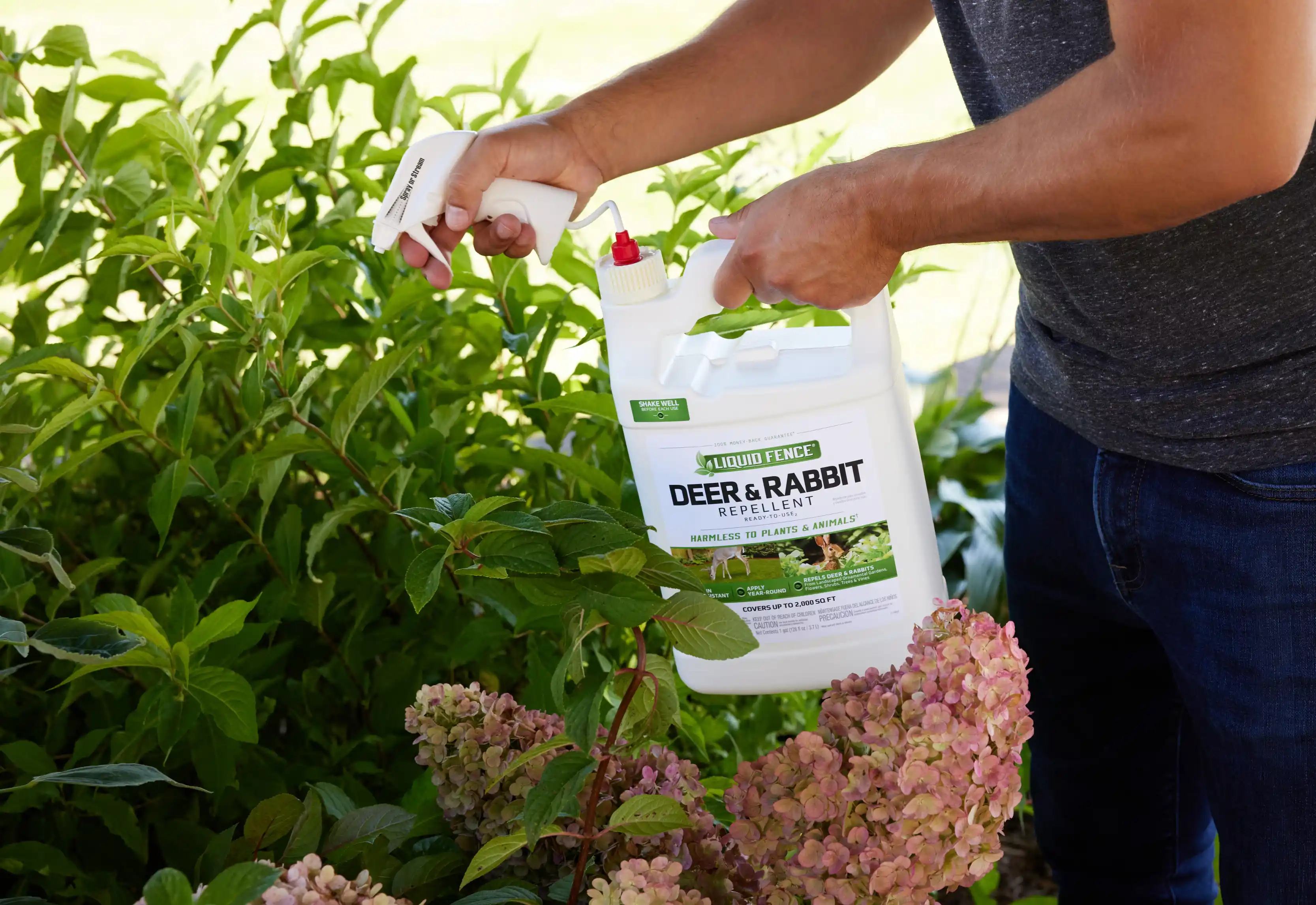
That’s essentially how Liquid Fence® animal repellents work. These formulas are designed to tap into animals’ natural avoidance instincts using scent and taste deterrents—without causing harm.
Once dry, humans don’t notice the odor of Liquid Fence® repellent products. But animals continue to detect it and interpret it as a signal to stay away. The result is a repellent that’s harmless to people, pets and plants—yet effective at keeping unwanted animals out of your space.